Generator Installation & Maintenance: Essential Guide for Homeowners & Businesses
Unexpected power outages can turn a regular day into chaos. Whether you’re a homeowner watching the fridge go dark or a business owner whose operations grind to a halt, having a reliable generator is more than a convenience—it’s peace of mind. But choosing and caring for a generator isn’t as simple as picking one off the shelf.
At Marquez Electrical, our licensed electricians have helped families and businesses across the region stay safe, powered, and code-compliant. We know what works—and what common mistakes can cost you when the lights go out. This guide walks you through each step, from picking a generator to keeping it in top shape.
Selecting the Right Generator for Your Needs ⚡
Not all generators are created equal. Some hum quietly in the background, powering essentials like lights and refrigerators. Others roar to life, keeping large facilities running smoothly during storms or grid failures. Choosing the right one is a bit like picking shoes: the best fit depends on your needs, environment, and budget.
Key Factors to Consider
- Size and Output: Start by listing what you want to power. Is it just the basics, or your whole building? Add up the wattage for each appliance or system. For homes, this might include refrigerators, HVAC, or medical equipment. For businesses, think about machinery, security systems, and critical IT.
- Fuel Type: Generators can run on gasoline, diesel, natural gas, or propane. Each fuel type has pros and cons. Gasoline is easy to find but less stable for storage. Diesel offers longevity and efficiency but can be noisy. Natural gas and propane are cleaner but may require special hookups.
- Portability vs. Standby: Portable generators are great for temporary or mobile use. Standby (fixed) generators kick in automatically during an outage and can power more equipment. For most homes and businesses, standby systems offer the best reliability and peace of mind.
- Run Time: Consider how long you need backup power. Some generators run for hours, others for days, depending on fuel tank size and load.
- Location & Placement: Generators need a stable, well-ventilated outdoor spot, away from windows or vents. Never install indoors or in attached garages—carbon monoxide is deadly.
- Noise Levels: Some neighborhoods or business parks have noise restrictions. Check decibel ratings and local ordinances before installing.
- Permitting & Code Compliance: Most localities require permits for standby generators. Installations must meet the National Electrical Code (NEC) and local building codes. Always use a licensed electrician.
Common Sizing Mistakes
- Guessing instead of calculating actual load needs
- Ignoring surge wattage (the spike when motors or compressors start)
- Overlooking future electrical needs (like EV chargers or new appliances)
A professional electrician will help size your generator correctly. This avoids overloads, nuisance tripping, and costly damage.
Professional Installation Process Explained 🛠️
Installing a generator isn’t a DIY project. It’s more like open-heart surgery for your electrical system—precision and experience matter. Here’s what to expect when you call Marquez Electrical:
Step-by-Step Installation
- Site Assessment: We evaluate your property’s layout, electrical panel, and fuel source. Placement must allow proper airflow and comply with manufacturer recommendations.
- Load Calculation: We review your current and future power needs, ensuring the system is neither undersized nor overkill.
- Permitting: Our team handles all local permits and inspections. Compliance with the NEC and municipal codes is non-negotiable.
- System Design: We design wiring, transfer switch placement, and grounding to protect against surges and faults.
- Installation: Licensed electricians install the generator, transfer switch, and fuel lines. We coordinate with gas suppliers if needed.
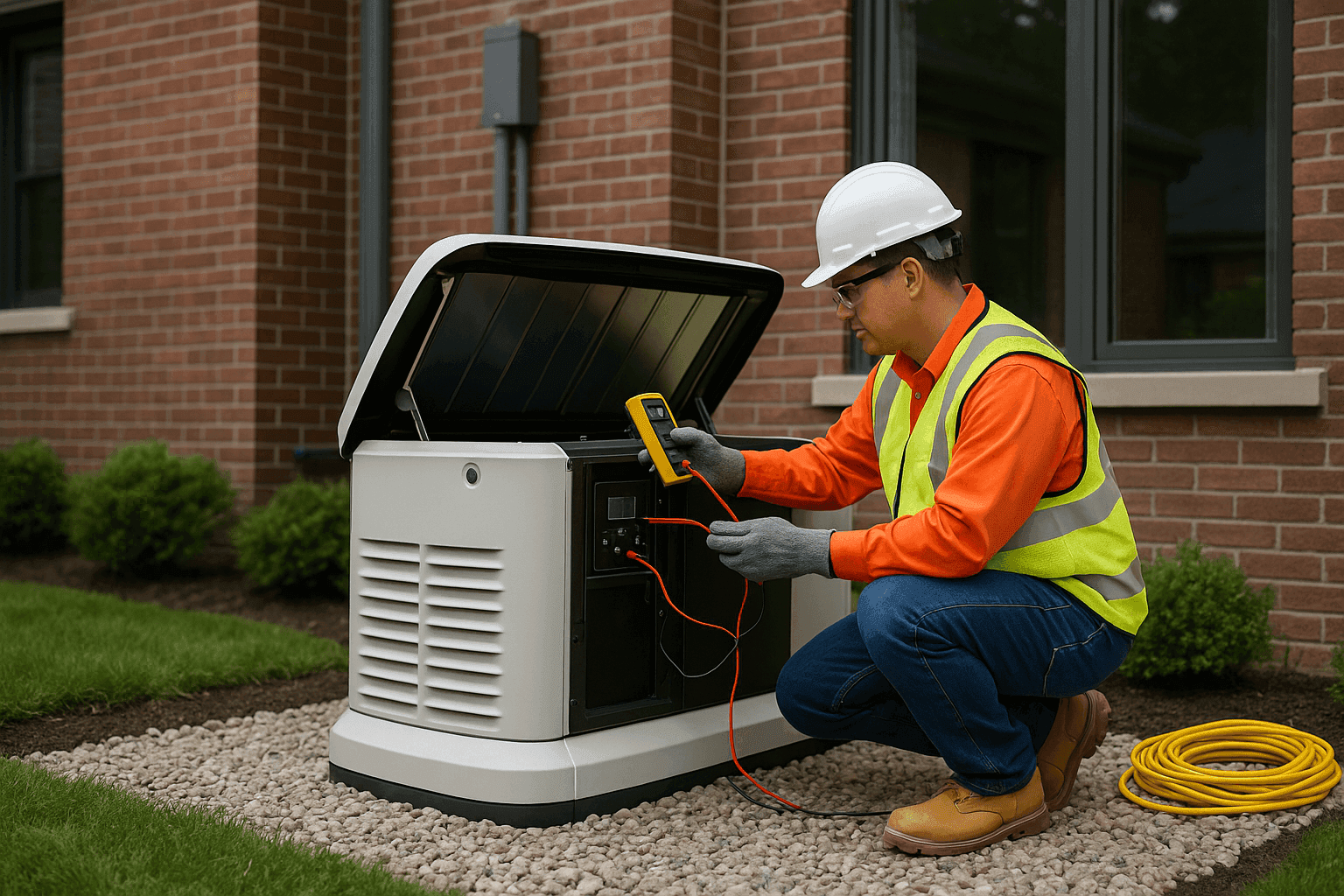
- Testing & Commissioning: Once installed, we run performance tests under simulated outage conditions. We check start-up response, transfer switch operation, voltage output, and safety shutoffs.
- Owner Orientation: We walk you through operating procedures, basic maintenance, and emergency shut-off.
Why Certified Installation Matters
- Incorrect wiring can damage appliances or create fire hazards
- DIY jobs may void manufacturer warranties or insurance coverage
- Professional electricians ensure code compliance, which is critical for Safety Checks near you
Reference: National Electrical Code (NEC), Occupational Safety and Health Administration (OSHA)
Routine Maintenance Checklist
Think of your generator like a car—it needs regular care to stay dependable. Neglecting maintenance is a bit like skipping oil changes. Sooner or later, you’ll be stranded.
Monthly
- Run Test: Start the generator and let it run for 15–20 minutes under load.
- Check for Leaks: Look for fuel, oil, or coolant leaks.
- Inspect Battery: Clean terminals and check voltage.
Quarterly
- Change Oil & Filters: Follow manufacturer recommendations.
- Inspect Belts & Hoses: Look for wear, cracks, or looseness.
- Test Automatic Transfer Switch: Ensure it switches power smoothly.
Annually
- Full System Inspection: Have a licensed electrician conduct a thorough check.
- Update Firmware/Settings: For smart or Wi-Fi-enabled models.
- Fuel Management: For diesel or gasoline units, check fuel quality and rotate stock.
Seasonal Prep
- Cold Weather: Use cold-weather kits or heaters if required.
- Storm Season: Test more frequently and clear debris from around the unit.
Log Everything
Keep a maintenance log. Record test dates, services performed, and any issues noted.
Reference: Manufacturer guidelines (Generac, Kohler, Briggs & Stratton), U.S. Department of Energy
Generator Safety Best Practices 🛑
Generators provide life-saving power, but they can be dangerous if misused. Safety comes first.
- Never run a generator indoors or in enclosed spaces. Carbon monoxide is colorless, odorless, and deadly.
- Install carbon monoxide detectors near sleeping areas and generator placement.
- Keep dry and protected. Don’t operate in heavy rain without proper covers.
- Refuel only when off and cool. Hot engines + gasoline = fire risk.
- Use heavy-duty, outdoor-rated extension cords if connecting directly.
- Avoid backfeeding. Never plug a generator into a wall outlet—this can electrocute utility workers and damage your system.
- Have a licensed electrician install transfer switches to safely isolate your home or business from the grid.
Reference: Consumer Product Safety Commission (CPSC), Electrical Safety Foundation International (ESFI)
Common Mistakes to Avoid
- Skipping regular testing
- Letting fuel go stale
- Overloading the generator
- Poor placement (too close to windows or vents)
- DIY electrical connections
- Ignoring warning lights or error codes
A little prevention goes a long way—both for safety and system longevity.
Tips for Maximizing Your Generator’s Lifespan
- Stick to a strict maintenance schedule
- Store fuel according to manufacturer guidelines
- Invest in surge protection for connected circuits
- Keep the area around your generator clear of debris
- Schedule annual Safety Checks near you with a licensed electrician
Frequently Asked Questions
How often should I service my generator?
Most manufacturers recommend at least annual professional service, plus monthly run tests. Heavy-use systems (like those in commercial buildings) may need more frequent checks.
Can I install a generator myself?
Only if you’re licensed and familiar with the NEC. Improper installation can be dangerous and may void insurance. Always hire a qualified electrician.
What size generator do I need for my home or business?
It depends on what you need to power. List your essential devices/appliances, check wattage, and consult an electrician for precise sizing.
Is a permit required for generator installation?
Yes, for standby units. Local codes and the National Electrical Code require permits and inspections for permanent installations.
Local and Seasonal Considerations 🌦️
- Cold climates: Use cold-weather kits to ensure reliable starting in freezing temps.
- Hurricane or storm-prone areas: Secure your generator and test before storm season.
- Wildfire zones: Follow local guidelines for fuel storage and placement to reduce risk.
Stay updated on local regulations—they can change with the seasons or after major storms.
Reference: Local building departments, National Fire Protection Association (NFPA)
A dependable generator is your safety net during outages, but only if it’s sized, installed, and maintained the right way. Let Marquez Electrical’s licensed electricians handle it—from Safety Checks near you to full installations and ongoing maintenance.
Call Marquez Electrical now — or reach us anytime at 888-896-8043 .